
When We Tell Prospects “This Isn’t a Good Fit”: Why Transparency Beats Sales Pitches


Last week, a prospect wanted to automate a process that, frankly, wasn’t ready for automation. We could have taken their money, built what they asked for, and watched it fail. Instead, we told them the truth: “This isn’t a good fit right now, but here’s what needs to happen first.”
They were surprised as a couple of vendors had already sent them proposals.
The Problem with “Yes” to Everything
The automation industry has trained title companies to expect vendors who say yes to everything. Can you automate this messy, exception-heavy process? Yes! What about integrating with a custom legacy system built in 1997? Of course! And deliver it all in three weeks? Absolutely!
Then reality hits. The bot breaks constantly. The exceptions take longer than the manual process. The integration doesn’t work. And the title company is left with expensive automation that creates more problems than it solves.
What Actually Makes a Process “Automatable”?
After building more than 840 bots supporting 2,500+ tasks, we’ve learned what separates processes that should be automated from those that shouldn’t.
Good Candidates for Automation:
- Repetitive tasks with clear, consistent steps
- High volume (you’re doing it dozens or hundreds of times)
- Rules-based decision points
- Clear exception handling paths
- Stable source systems that don’t change weekly
Poor Candidates (At Least Initially):
- Processes that require constant human judgment calls
- Exception-heavy workflows where every case is different
- Tasks dependent on unreliable or frequently changing systems
- Low-volume processes where manual work is actually faster
Industry analysts confirm that RPA can deliver cost savings of 20 to 25% on average, but only when the right processes are selected from the start. Cost Savings of 20-25%
When We Say No (And What We Recommend Instead)
We’ve turned down automation projects for all sorts of reasons:
“Your process isn’t standardized yet” One client wanted to automate their open order process. Great idea, except they had offices in 4 different states, with multiple staff completing the process in many different ways. Before we could automate anything, they needed to standardize the process itself.
We decided to focus on one state first, prove that automation works there and focus on the other 3 states once they’ve proven the benefits of automating this process with standardization in place. The other option was to build 4 unique workflows, for the same process, which would be much more expensive.
“The data quality isn’t there” You can’t automate data extraction from documents if the documents are inconsistent, low-quality scans. The bot needs clean inputs to produce reliable outputs.
Instead of building a bot that would fail, we recommended they improve their document intake process first. Sometimes the answer is better scanning equipment or document requirements, not automation. This is now becoming less of an issue as AI is much better at reading and understanding documents of all quality, including hand-written ones.
“The volume doesn’t justify it” A title company recently inquired about automating their title search process, on their paid access to a title plant. Based on our development cost of $7,300, plus monthly support fees of $500 per month, that would push this to about a $13k investment over the first 12 months. Because their monthly volume was less than 100 per month, the math just didn’t work.
We agreed that they should continue outsourcing searches to their BPO partner for now, and then reconnect on automation when their volumes reach about 2X of the current levels.
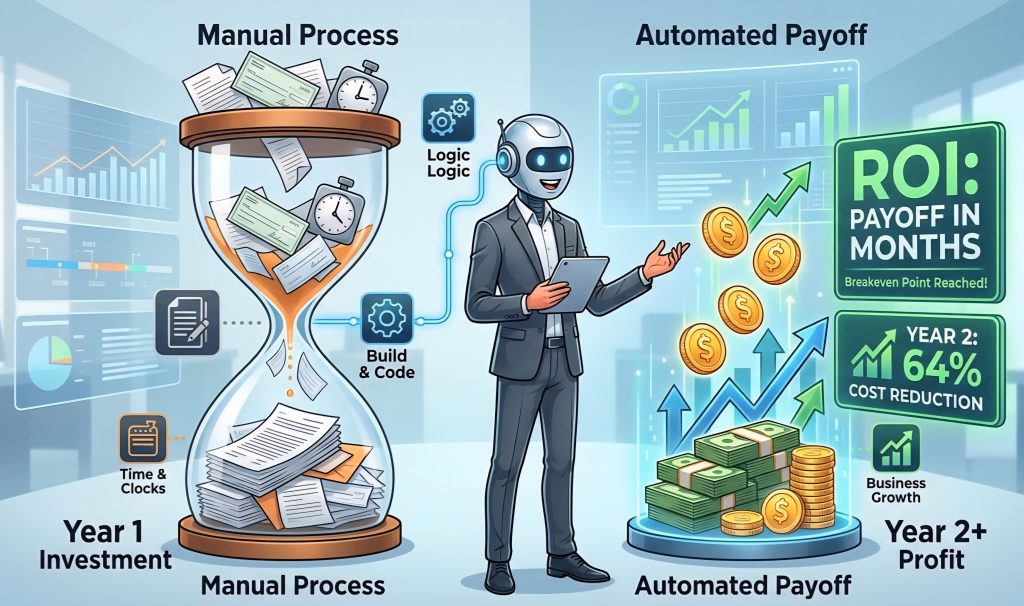
Understanding your breakeven point before you build is critical. We cover how to calculate automation ROI in detail in our post on why most automation projects take years to pay off. Why most automation projects take years to pay off.
The Questions We Ask Before Saying Yes
Before we commit to any project, we dig into the details:
-
- Volume and Handle Time? If it’s not at least weekly, automation might not be worth it. Volume is taken into consideration along with the average handle time per transaction, workflow complexity and current resource costs.
- Exception Rate?If 40% of cases need manual intervention, you’re not really automating, you’re just adding complexity.
- System Stability? If your county website changes layouts every month, maintaining the bot will cost more than the savings.
- Downstream Impact of Errors?In title insurance, bad data can mean missed liens or policy exceptions. If the stakes are high and the process is complex, human review might still be essential.
- Organizational Readiness?Automation requires someone to monitor exceptions, update processes, and manage the bots. If you don’t have that capacity, or contract with your vendor partner to handle that, the bots will sit unused.
What Transparency Actually Looks Like
When we assess a potential project, we give clients one of three answers:
“Yes, this is perfect for automation. Here’s how we’d approach it.” Clear process, high volume, stable systems. Let’s build it.
“This could work, but here’s what needs to happen first.” The potential is there, but prerequisites aren’t met. Fix those, then we’ll automate.
“This isn’t a good fit for automation right now.” The economics don’t work, the process is too variable, or manual handling is genuinely better.
Why This Approach Works
Our clients appreciate honesty because it builds trust. They know when we do take on a project, it’s because we’re confident we can deliver real value.
And here’s the thing, clients remember when you tell them the truth. Most will reach back out when the process(es) are more stable and primed for automation.
The Industry Needs More Honesty
I talk to title companies all the time who’ve been burned by automation vendors who promised everything and delivered disappointment. They’re skeptical, and rightfully so.
The solution isn’t better sales pitches. It’s better assessments, honest conversations, and the willingness to say “no” when automation isn’t the right answer.
At TrueFocus, we’d rather build 10 successful automations than 20 failed ones. Our reputation is built on solutions that work, not proposals that sound good.
Not Every Problem Needs a Bot
Sometimes the answer is better training. Process improvement alone can eliminate the need for a bot entirely. Hiring another person may even be the right call. And sometimes—yes—automation is the perfect solution.
Our job is to figure out which is which and tell you the truth, even when the truth costs us a sale.
Because in the long run, that’s how you build relationships that last beyond a single project. That’s how you become a trusted partner, not just another vendor.
Want an honest assessment of your automation opportunities? Contact us at info@truefocusautomation.com. We’ll tell you what makes sense to automate and what doesn’t.